Part 1: Making Wikipedia "GLAM-friendly"

Recently there has been a flurry of activity in the Gallery, Library, Archive and Museum (GLAM) sector  about how they can be more “Wikipedia-friendly” both directly and indirectly. But, what’s been happening in the Wikimedia world to make it more “GLAM-friendly”? Actually, a fair bit.

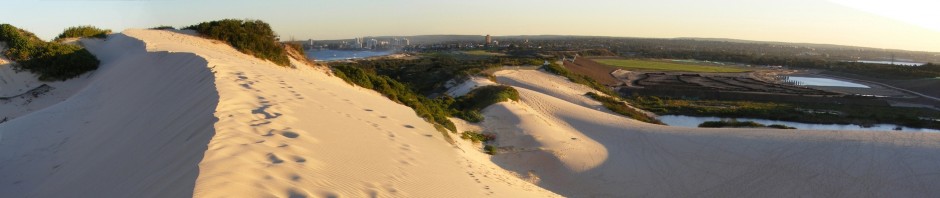
[This is the sign outside “the Domain“, a public park in Sydney, but I would like to think that it applies equally to the Public Domain of creative works. Creative works should be used, not just admired from behind a fence].

But before I get to that (in part 2), here is blogpost part 1. listing just some of the things coming out of the GLAM sector that Wikimedians might be interested in.

1. Collections are for use, but is Wikipedia the prime outlet?” by Josh Hadro at LibraryJournal.com This article states that:

“Special collections are for use…However, opening up digitized special collections to the broadest possible usage isn’t always easy, according to participants, though others stressed the importance of libraries making their collections’ presence known on popular sites.”

It goes on to explicitly discuss the possibility of working with Wikipedia in linking out to library’s special collection archives.

2. Five rules for museum content” by Seb Chan from the Powerhouse Museum in Sydney (with whom Wikimedia Australia has worked closely with in the past). These “rules” are that museum content (not limited to object but also the information about those objects) should be:

  • Discoverable – it is where I am and where I look for it.
  • Meaningful – I can understand it.
  • Responsive – to my interests, mood, location.
  • Usable/Shareable – I can pass it on.
  • Available in three locations – online, onsite and offsite.

Combine these simple rules with the Powerhouse Museum’s funky new strategic plan (2009-2012) which calls for “Dissolve boundaries between exhibitions, programs, publications and web content” and “Increase the level of collection information available through open access…” and you have a museum that is trying to lead the way in being open to Wikipedians using and reusing their content.

3. Similarly, the Smithsonian museum has released its new strategy which calls for the creation of the “Smithsonian commons” (on their own blog) (on the Creative Commons blog) which calls for:

“Establish a pan-Institutional policy for sharing and using the Smithsonian’s digital content, with particular focus on Copyright and Public Domain policies that encourage the appropriate re-use and sharing of Smithsonian resources.”

4. The National Library of Australia is creating a “Copyright Status Calculator” which will AFAICT, automate much of the process of determining the copyright status of works in their collection and they intend on making it open source. Once modified for the local copyright laws/exceptions this could be a boon to the staff in GLAM institutions with the often thankless task of undertaking copyright assessment. This program is simple enough to explain but the devil is in the detail. It combines the metadata for the collection item with a flow-chart logic of copyright law. So long as the metadata is in a consistent format the system could conceivably chew through a large proportion of the collection relatively quickly giving precise information. All edge-cases could then be dealt with manually. Very cool. Currently, every single photograph in their collection contains this standard phrase, irrespective of the copyright status of the photo:

“You may save or print this image for research and study. If you wish to use it for any other purposes, you must complete the Request for permission form.” [See my previous post “the digital rail-gauge” for more extensive rant on this topic 🙂 ]
With that kind of automated tool institutions with large collections can safely make more nuanced access statements on most of their collection without increased labour time of individually checking records.

5. Responses to the “GLAM-WIKI recommendations” are starting to come in. Catherine Styles who was with the National Archives of Australia at the time of the conference has recently published her personal response to the recommendations and they are awesome. They point out that in many cases Wikimedians would love to help and do things, in our own esoteric way, that would otherwise cost the institution considerable time and money e.g. digital restoration and metadata cleanup. A theme running through the response is a desire to see a toolkit or training package developed specifically for the GLAM sector to understand all the interlocking issues being raised. Not simply “how to edit” but also more fundamental things like “why not non-commercial”.

5a. Another response to the GLAM-WIK recommendations that will be published soon (and I’m very excited to have heard this) is that the National Library of Australia has convened a high-level committee to make a formal response. As an organisation that already integrates Wikipedia into many of their services (more than anyone else worldwide as far as I know) they are in a fantastic position to really engage with these recommendations. For example, how many libraries do you know that put the Wikipedia biography of the person in their catalogue search records:

nla-catalogue

Posted in museums | 5 Comments

Conflict of Interest & Archives

A fortnight ago a change went through the English Wikipedia’s policies, with relatively little fanfare amongst the Wikipedia community, which has raised quite some excitement and some questions in the cultural sector.

First a description, then two questions for Wikipedians, then four principles for archivists.

It is a change to the Conflict of Interest (CoI) policy. Specifically, an addition was made to the list of exceptions to this policy that allows employees of archives to link to items in their collection. The precise text reads:

Non-controversial edits

Editors who may have a conflict of interest are allowed to make certain kinds of non-controversial edits, such as:

[…]
7. Adding pointers to primary sources in archives, special collections or libraries in the Research resources section of an article. Also, adding external links to digitized or digital primary sources or finding aids.

I’m actually surprised that Wikipedia didn’t have this exception to the CoI policy before. To me it seems perfectly sensible that Wikipedia should be a) encouraging professionals with expertise to contribute their knowledge; and b) enabling our readers to take their research further by putting them in touch with the physical archive. Nothing beats the real thing after all!

This change went through with (relatively) little fuss considering that CoI is probably the biggest sin you could possibly be accused of in Wikimedia-land. Neutral POV and non-commerciality are such fundamental things to the Wikipedia community that you are strongly discouraged from editing articles about the company that pays you. However it was thought that people whose job it is to preserve and study our cultural heritage should be allowed to contribute their expertise to Wikipedia too – so long as their contributions are not intended to merely increase the exposure of their organisation.

Wikipedia should include references such as this, which was added (in July last year) in the references section of the article [[William F. Durand]]:

And if someone from Stanford University wants to add that into Wikipedia then IMO they should be encouraged to do so.  [It was actually this addition that started the whole debate that led to the CoI change in the first place – after a quite undesirable biting experience at their userpage here.]

However, Wikipedia should not include links that simply say “[seemingly unrelated archive] has documents about this topic” or even worse “[seemingly random library] has a copy of a book written by this person.” It is concern about this kind of spam-like link that the dissenting Wikipedians were worried about in the debate about whether to add this exception to the CoI policy at all. Wikipedia is not a Linkfarm and there was concern that employees of archives would start to inundate Wikipedia with links to everything in their collection simply to increase the exposure of their organisation.[1]

...no thanks.

...ummm...no thanks.

My Questions (for Wikipedians):

However, there are two questions I have raised and I would like people’s input on them.

  1. The exception specifically refers to “archives, special collections or libraries” and I know some museum curators feel that they’ve been intentionally excluded. Was the intention to disallow museum artefacts from being linked to in the same way as archival resources (noting that the line between “museum” and “archive” is often quite blurred)? If so, why? If not, then can I suggest we re-phrase the exception to explain that we mean to allow all “cultural collections institutions” (a.k.a. GLAMs) in this way?
  2. The exception refers to the “research resources” section of the article. Is this a new section that should be added to the end of the article or is this a cover-all term for the Standard appendices such as “external links” and “further reading”? (I’m assuming the latter).

I have asked these questions at the talkpage for the CoI policy here. Please contribute your views.

My suggestions (for archivists):

  • Link to unique, and uniquely relevant, things. Original research material is what this is about. That is, linking to the most important things about a topic which have been preserved. So, if your institution has, for example, the original document (hint hint) written by William Bligh listing the people involved in the [[Mutiny on the Bounty]], then it would be great to include the link to that record in the Wikipedia Article. On the other hand, if your institution has some items in the collection that happened to be written in Paris in 1910, please don’t link them to the article [[Belle Époque]].

page 1 of Bligh's list

  • The link should provide access to material. Link to the actual catalogue record for the item, especially if there is a digitised copy, rather than a generic page that says “[institution] has content about [topic].” It will be of most benefit to the reader if they are taken straight to the item’s record and this requires that the institution’s website has stable URLs, no log-in requirement and a description of the item. If the website doesn’t have these then what value would a link to it provide?
  • Get a personal user account. Register with your own account, it can be a pseudonym, and not with a shared account (WP:NOSHARE) or an account named after your institution (WP:ORGNAME). These policies say that there must be a 1-to-1 correspondence between a user-account and a human.
  • Declare yourself. Place a note on your userpage like this person did.

[1] Whether or not you agree with it, Wikipedia has a “nofollow” tag on all external links as part of its several tools to fight spam – in this case to discourage linkspam. So adding links to an organisation’s website won’t increase Google rankings anyway.

Posted in museums | 2 Comments

Colourful Strategic Proposals

And so, with the little message that appeared at the top of every Wikimedia page today – pointing to this letter and a very professional looking “I’d like to volunteer and here are my skills” page – the Wikimedia Foundation’s Strategic Planning process is warming up for a new phase.

The first phase has been largely charaterised by the “call for proposals”. In this, people would use this simple template to throw all of their ideas into the mix in the world’s largest brainstorming session. These many and various proposals have been sorted into 13 sections and 41 subsections. Every single one of the submitted proposals can be viewed at:

http://strategy.wikimedia.org/wiki/Call_for_proposals

Many of these proposals are fantastic and some Wikimedians have already begun to make their own favorites lists. I encourage you to do the same.

However, as with any brainstorming, some ideas are never going to get past the first phase because they are much too large or much too small or simply because they are a bit out of left field. I’d like to dedicate this blog post to some of the ideas that I think are in that last category. To these more colourful of the strategic proposals – I salute you!

  • Create a Wikimedia Chapter for the towns of Brantford (proposal) and another for Woodstock (proposal), both in Ontario, Canada. And you know what – I reckon that there *should* be Wikimedia group in these towns. Maybe not a full blown chapter but definitely something. Get to it Canadapedians!
  • Create audio CDs of spoken Wikipedia articles specifically designed for people to listen to in their sleep – “wiki-while-you-sleep” (proposal). Somehow, if some people already think Wikipedia is a cult, selling subliminal learning tapes is probably not going to help change that… Or perhaps the proposal is for people with insomnia – make them listen to Wikipedia articles and they’ll fall asleep straight away!
  • Make Wikipedia compatible for MS-DOS and give out copies of Wikipedia on sets of floppy disks (proposal). I’m thinking that’s going to be one hellavalota floppy disks to fit all this in:

  • Use the discussions at talkpages as the basis for research into artificial intelligence (AI) on the basis that future’s AI will use Wikimedia’s rules of behaviour as its model  (proposal). This of course assumes that Wikipedians are intelligent to start with… I thought we were just monkeys with typewriters 🙂 Please, no one show this proposal to Andrew Keen.
  • Have Wikipedia be a sponsor of a NASCAR race (proposal). NASCAR is a kind of American car racing where you only turn to the left. Would this mean we would be criticised for being biased against the right?
  • Host Wikipedia from space to “…protect the human knowledge reflected in Wikipedia from the coming partial collapse of civilization” (proposal). Somehow I can’t read the words “host Wikipedia from spaaaace!” without saying it the same way Daffy Duck says the words “Duck Dodgers in the 24th and 1/2 Century” (at timecode -5:40 in this *awesome* video).
  • Have a countdown on Wikipedia to December 21, 2012 at 11:11 UTC (proposal). Apparently that’s the date the world is going to end so we might as well either make a countdown and know, in that instant before we all get obliterated, that we were right or have a party when we don’t. Either way, it’s good excuse for a really big countdown clock.
  • Re-hire Larry Sanger, “…if his terms are acceptable to the board” (proposal). Somehow I don’t think his terms are high on the priority list.
  • Imagine what life will be like in 96 years (proposal). I’m not quite sure why the year 2105 was chosen specifically, but the idea of imagining a better future is always a good plan. But, like the a million penguins project, I suspect we would have difficulties sticking to the plot.
  • Create a new Foundation for Wikipedians against global warming (proposal). Because providing the sum of all human knowledge isn’t hard enough, now we’ve got to save the planet too. Then again, if anyone can do it, Wikimedians can!
Posted in misc | 2 Comments

Content Liberation

[n.b.: this is a discussion about subtleties of English language usage and therefore the issues will be different or possibly not applicable in other languages.]

You may know the old saying:

“one man’s terrorist is another man’s freedom fighter

When we in the Wikimedia community use the phrase “content liberation” in front of those who look after original collections of content, they don’t hear “freedom” they hear “theft”.

[One of the idea-boards at the Chapters meeting in Berlin]

“Content liberation” is a commonly used phrase in Wikimedia-land to describe the effort to have media items (most frequently collections of old photographs):

  1. Digitised;
  2. Published online (especially in high resolution, in a lossless format, without DRM or irritating intermediate layers like zoomify);
  3. Released (if still in-copyright) under a free-culture approved copyright license;
  4. Uploaded to Wikimedia Commons.

The emphasis in this effort is the publication and dissemination of cultural heritage that was previously unavailable, or only available to a certain few, so that it can be given a new lease of life – to set it free.

However for the gallery/library/archive/museum (GLAM) that owns the original physical object there is a corresponding and sometimes contrasting concern to that of publication – that of preservation. Not just preservation of the original object in its proper state but also the preservation of the context and proper ‘meaning’ of the object. Just as people don’t like to be quoted out of context, museums don’t like their works being used to demonstrate ideas contrary to the spirit of the object. The phrase that represents this feeling, something that I have been told countless times when talking about the value of remix culture, is:

“…preserving the integrity of the collection.”

So, you can see that from that perspective, when we in Wikimedia-land come along to a museum and ask them to “liberate” their photographs to Wikimedia Commons (and any subsequent users of our free-culture content) they might be happy for the increased publication but also unhappy about the potential for their photographs to be “misquoted”. It is their job, after all, to make sure people don’t just have access to knowledge but that they are given it in an appropriate and correct way.[1]

It is at this point that the phrase “but it’s out of copyright, you have no right to stop me using the image any way I chose once it’s been liberated” might spring to the mind of a free-culture advocate. I’ve tried it. Unsurprisingly, it’s not endearing…

oPWTHxO

[The content liberation army of the People’s Republic of Wikimedia
comes to deliver “freedom” to another museum.]

Imagine if you were in a political or religious debate with someone and they told you that you needed to be “liberated”. I am willing to bet my left arm (not my right – I need that one) that you are no longer going to listen to a word that person has to say. So, if we want to build relationships with content owners we need to give them the power to decide for themselves whether or not to join us. What we should not do is take their power from them by “liberating” their content, thereby forcing them into a defensive stance – a position where they are likely to stay in for some time.

Of course, this does not mean that we should roll over and acquiesce to the outrageous claims made by some content holders – such as “you may look at this 200 year old painting on our website but you aren’t allowed to copy it”.[2]  Nevertheless we need to find a more collaborative phrase than “liberate”. This is why the subtitle of the GLAM-WIKI conference was “finding the common ground” and the key phrase we tried to get across (and repeated over and over) was that we wanted to focus on “sustainable partnerships”.

I think WM-UK’s Brian McNeill has a very good added point too:

To sum up, I see “content liberation” as the ideological goal we aim for, but we have to live in the real world. There has to be a clear focus on reassuring those [who are] running museums and galleries that WMF isn’t out to steal their customers and eat their lunch – you have to convince them that making copies of work available is going to highlight what they have, and that only there can you view it in “eyeball Xmillion pixels” resolution. Reality is that the Wikimedia/Wikipedia pages for any art they have are going to rank far higher than their own archives. I’d say there is a degree of responsibility to refer people back to them, and encourage people to actually go to the physical premises. Sure, the “content liberation” allows millions who might never have seen a work to see a photograph, but there should be an effort to encourage those fit, able, and affluent enough, to go see it in person. What I take from “content liberation” is that you no longer need to go to the museum because it is online. That is most definitely not what I think should be encouraged, nor a realistic pitch to those who you want to share content.[3]

[1] This has particular resonance with the issue of Indigenous cultural rights (discussed in greater detail in my “GLAM-WIKI recommendations” blogpost – part 3). This is a whole huge area of discussion in its own right but it is something, just like Biographies of Living People, that I am positive will become increasingly important as Wikipedia becomes increasingly mainstream. More on this topic some other time.

[2] On a related note, I’d like to recommend that anyone who is interested in the “in-person copying policy” of museums (also known as the photography policy) should read this post by the suitably awesome Nina Simon (on twitter here) who is working on her book “The participatory museum: a practical guide” which I eagerly await.

[3] The fact that “nothing beats the real thing” is something that was also raised in my “GLAM-WIKI recommendations” blogpost – part 1. For everything from museums to zoos to football matches it is important to encourage those that are able to make real-world interaction with their culture that Wikipedia doesn’t currently do – but we’re working on it.

Posted in copyright, museums | Tagged | 6 Comments

Storytelling

A couple of days ago I spent some time talking with the good people at Fenton Communication who were selected to help the Wikimedia Foundation in the Credibility Campaign. The purpose of this campaign relates somewhat to a post I made in July when I pointed out that very few people actually know that Wikipedia doesn’t have ads, is a non-profit, etc. We, the Wikimedia community, have not really done a good job so far of telling people who we are and what we stand for. That’s where people like Fenton come in.

The phrase for this in marketing speak is apparently “storytelling”.

We need to learn the right way to explain ourselves succinctly and effectively in order to attract new editors to the projects, improve our public image and increase the likelihood of donations. So, I thought I’d repeat here a couple of things that I thought were important enough to tell them.

One of the most interesting questions they asked was “What would you do if Wikipedia wasn’t there?” I took this to mean if WP suddenly disappeared overnight and no one had any backup copies. I believe that we would scream at the gods in anguish that our work had gone but then we would all sit down and *do it all again*. And we would do it better, learning from mistakes we’d made before. Moreover, money would come flooding in from people and organisations that had grown rely on Wikipedia and accepted that it was the natural order of things that anyone in the world could and should be able to satisfy their insatiable desire to know how many words contain a ‘q’ not followed by a ‘u’.

I bet that if Wikipedia went offline tomorrow due to some catastrophe there would be a $50 million cheque on the WMF’s doorstep within a fortnight. So, assuming now that Wikipedia is not going to disappear tomorrow the task is to take that idea and turn a disaster story it into a positive fundraising strategy.

Another interesting thing that came up was about people. Individual people. All of the measures we have used in discussing the successes of the Wikimedia movement have been largely quantitative – x number of articles, y number of images, z number of languages and a top-5 website. All very impressive but, well, not very likely to make me want to give money. The Wikimedia community needs to be able to tell the stories of the individuals who we’ve helped and to tell our own stories of why we contribute. There needs to be a face to the abstract concept of “sum of all human knowledge” and for “for free” and definitely for “in your own language”. One of the best (only?) forms of this kind of story I’ve seen to do with Wikipedia was the 5 poster series by Mike Perez for a school assignment.

[“the Art Historian” – I edit Wikipedia campaign, 2008]

Put it another way, when you see advertisements on TV for famine relief projects they might mention a statistic or two but they always ALWAYS focus in on an individual – they personalise the story. That way, when you donate, you’re not donating to a statistic you’re donating to that particular person. That’s how “child sponsorship” works to keep people giving each month – you feel like your owe that particular child a regular payment.[1]

Finally, here are a four quotable quotes that, whenever I do any media interviews about Wikipedia, I try and get in (and then elaborate if the interviewer wishes). These four “here’s some I prepared earlier” phrases go well because it’s hard to get complex ideas across quickly in an interview when there is a need to balance “being entertaining” with “being factual” in a very limited timeframe.

1) “What the Red Cross is to health and emergency preparedness, Wikimedia is to knowledge and education – Global. Neutral. Free.

I first tried that out at the Berlin Chapters meeting and it went well then, I’ve since re-used it many times. It gets across two things that are usually very difficult to summarise: that there is more to Wikimedia than just Wikipedia (just like that there is more to the Red Cross than just blood donation); and that there is a global network of chapters that perform local services and fundraising in aid of a greater cause. [2]

2) “People who like sausages and the law shouldn’t see either being made – the same is true for encyclopedias. It’s a messy process but the end result is good.”
This is of course a bastardisation of the famous quote misattributed to Otto von Bismark. I’ve actually been quoted in the newspaper (Sydney Morning Herald here or Melbourne Age here) with this one too. It is a quick answer to the common media question along the lines of “but don’t you have editorial fights about things? Is it authoritative?” I like to point out that you can bet your bottom dollar that Britannica and any other encyclopedia has lengthy and heated editorial debates too. We just have ours in public and we think that’s an important thing to do, to encourage people to think of ideas as contested and contestable.

3) “Knowledge wants to be free. Knowledge also wants to be expensive.”
This is a well known quote in the free culture movement and with good reason. It succinctly sums up the tension between cost and liberty and is a good lead-in to describe that by “free culture” we mean “free” in two ways – gratis and libre. It is also a good way to raise the point that any donations are welcome.

4) “Wikipedia works in practice, not in theory”.
This is another well know wiki-quote that comes from the famous essay “Raul’s Laws” (although it is edited down from the original) and is known as the “Zeroth law of Wikipedia”. I actually used it as the closing sentence to my thesis – ironic really since I had just spent the preceding 100 pages trying to explain the theory. This quote is a good one in interviews because it’s both whimsical and also profound. It breaks through attempts to pigeonhole Wikipedia and asks you to accept it for what it is – something that has never happened before, refuses categorisation and doesn’t need anyone’s permission or theoretical model to exist.

And that gets to the real heart of it for me – permission. This, I think, is why I love Wikipedia. Because it showed me how I don’t need to seek permission to learn nor seek permission to create: Wikipedia gave me agency in my own culture.

[1] Whereas instead your money is actually going into a common fund for the whole project. What, you didn’t think that the child that you sponsor and get letters from is getting your money directly did you? If that were the case then what would happen to the children whos sponsor has stopped (as must happen now and then) – does the aid organisation throw them out? No. The letters are personal but the money is not. This is not disingenuous, it’s just good marketing.

[2] If you do use this quote yourself be careful NOT to say “Wikipedia is the Red Cross of knowledge” – that could be considered as trading off the reputation of another organisation rather than simply making a comparison. Apparently Rolls Royce, Rolex, etc. spend quite a lot of money chasing down small companies to stop them marketing themselves as “the Rolls Royce of plumbers” or “The Rolex of electricians”!

Posted in Uncategorized, wikimedia foundation | 8 Comments